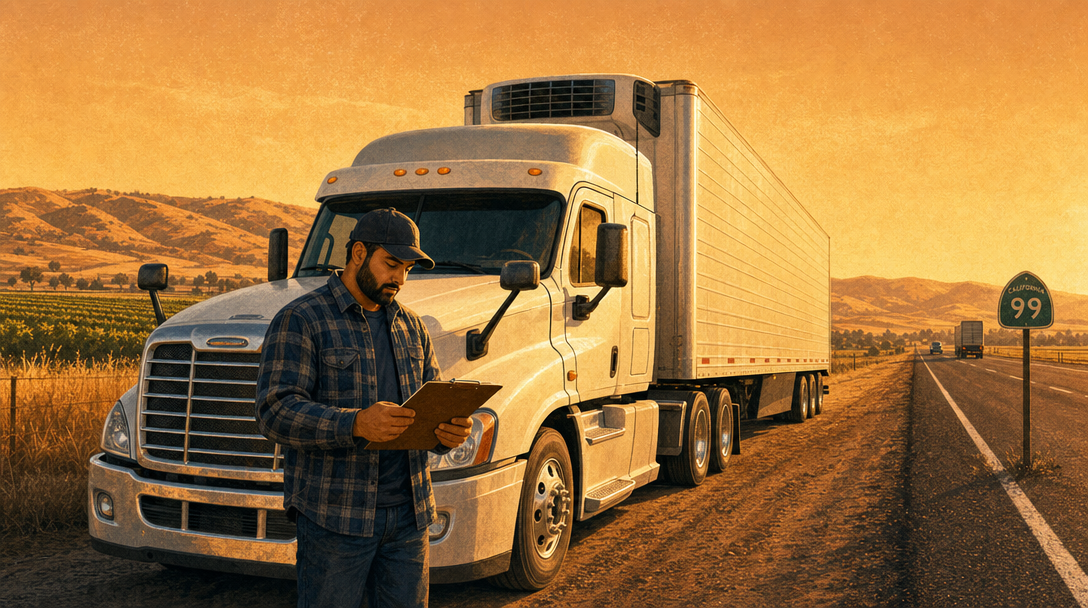

If you haul freight for other people, cargo insurance is one of the most important coverages you can carry. It protects you financially when the goods on your trailer are damaged, destroyed, or stolen while in your care.
What cargo insurance covers
Cargo insurance — sometimes called motor truck cargo insurance — pays for loss or damage to the freight you're transporting. This includes damage from accidents, theft, fire, and in many cases weather events. The policy covers the value of the goods, not your truck (that's what physical damage insurance is for).
A typical cargo policy covers goods from the time they're loaded onto your trailer until they're delivered at the destination. If something happens in between — a rollover, a reefer unit failure, a pallet shift that crushes product — your cargo insurance responds.
Who needs it
Any for-hire carrier hauling freight for shippers or brokers needs cargo insurance. The FMCSA requires a minimum of $5,000 in cargo coverage for household goods movers, but that minimum is almost meaningless in practice. Most brokers and shippers require $100,000 or more in cargo limits before they'll give you a load. Many require $250,000.
Even if you're an owner-operator leased to a carrier, you should understand the cargo coverage situation. The carrier's policy may cover the freight, but if there's a dispute about negligence, you could be on the hook.
Need a cargo insurance quote? Call us at (510) 270-8141 or get a quote online. We'll match your limits and commodity type to the right policy.
Common exclusions
Cargo policies don't cover everything. Common exclusions include losses caused by improper loading (if you secured the freight incorrectly), inherent vice (the product spoiled on its own), and war or nuclear events. Livestock, live animals, and certain hazardous materials may also be excluded or require special endorsements.
Refrigerated cargo is a big one — if you haul temperature-sensitive goods, make sure your policy explicitly covers reefer breakdown. Some standard policies exclude it, and you'll need a reefer endorsement.
How limits work
Cargo insurance limits are typically written on a per-occurrence basis. A $100,000 limit means the policy pays up to $100,000 per incident, regardless of how many claims you have during the policy period. Some policies also have an aggregate limit for the full year.
Your limit should match the maximum value of freight you'll haul on any single load. If you're hauling $200,000 worth of electronics but only carry $100,000 in cargo coverage, you're exposed for the difference.
The bottom line
Cargo insurance isn't optional for most for-hire carriers — brokers won't book you without it, and one bad load can wipe out a small operation financially. The good news is that cargo coverage is relatively affordable compared to auto liability, and an independent agent like Golden Era can shop multiple carriers to find the best rate for your specific operation.
If you're not sure what limits or endorsements you need, give us a call. We'll look at what you haul, where you run, and what your broker contracts require — and we'll build a cargo policy that actually fits.